Thyroid Health Support: Move Beyond "Normal" Lab Results

Evidence-based nutritional therapy for Hypothyroidism and Hashimoto’s. I help you address the root causes of fatigue, brain fog, and weight resistance—even when your GP says everything is "fine."
Registered Nutritional Therapist (mANP) • Science-Led • 100+ Clients Supported



Why "Normal" Thyroid Labs Aren't Always "Optimal"
The frustration of the "In-Range" diagnosis
If you are struggling with persistent fatigue, hair loss, or weight resistance, yet your doctor insists your labs are "normal," you aren't alone. Standard thyroid testing usually begins and ends with TSH (Thyroid Stimulating Hormone). While TSH is a vital signal from your brain, it only tells us if your pituitary gland is asking for more hormone, it doesn't tell us if your cells are actually receiving it.
Understanding the Full Thyroid Panel
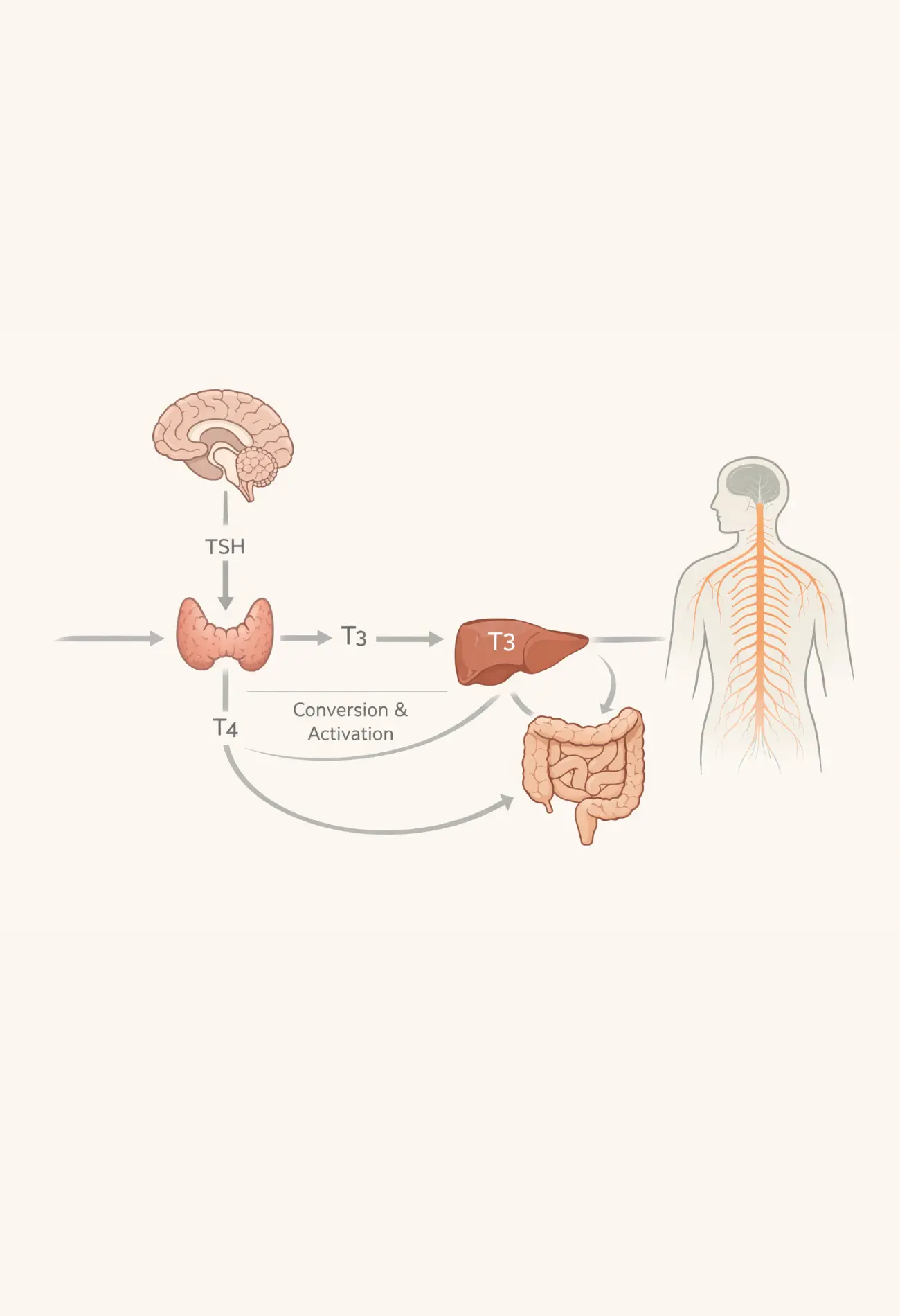
To get a clear picture of your metabolic health, we must look beyond TSH. A functional approach evaluates the entire thyroid cascade:
Free T4 (The Storage Hormone): The raw material your thyroid produces.
Free T3 (The Active Hormone): This is the "gasoline" for your cells. If your Free T3 is low, you will feel hypothyroid, even if your TSH is perfect.
Reverse T3 (The Brake Pedal): During times of high stress or inflammation, your body may divert T4 into Reverse T3, effectively "braking" your metabolism to protect you.
Thyroid Antibodies (TPO & TG): Essential for identifying Hashimoto’s Thyroiditis, an autoimmune condition that is often missed for years because it doesn't always show up on a standard TSH screen.
Standard laboratory ranges are based on a broad population average, including people who are already unwell. Functional Nutrition looks at optimal ranges, the specific narrow window where your energy is highest, your mood is stable, and your metabolism is thriving.
The Three-Pillar Framework for Thyroid Restoration
Moving beyond symptom management to root-cause resolution.
Thyroid health is not a localized issue, it is a whole-body process. My approach focuses on the three critical foundations required for your thyroid hormones to actually work at a cellular level.

Metabolic Safety & Energy Availability
Before your thyroid can function optimally, your brain must perceive that the body is safe. Chronic under-eating, over-training, or unstable blood sugar signals a state of scarcity, causing the body to down-regulate T3 production to conserve energy.
The Focus: Restoring adequate caloric intake, balancing macronutrients, and stabilizing blood sugar to turn the metabolic lights back on.
The Result: Reduced cortisol demand and a natural signal to the thyroid to increase hormone production.
Gut Integrity & Liver Function (The Conversion Hub)
Did you know that roughly 80% of thyroid hormone conversion, turning inactive T4 into active T3, happens outside the thyroid gland? Specifically, in your liver and your gut.
The Focus: Optimizing bile flow, supporting liver detoxification pathways, and addressing intestinal permeability (leaky gut) or dysbiosis.
The Result: Maximizing the active hormone available to your brain and muscles, effectively clearing brain fog and physical fatigue.
Immune Regulation & Mineral Balance
For those with Hashimoto’s, the priority is calming the immune system. We look for the triggers, whether they are nutrient deficiencies like Selenium or Zinc, chronic low-grade infections, or environmental stressors, that keep your body in a state of self-attack.
The Focus: Replenishing essential thyroid co-factors and using anti-inflammatory nutritional protocols to lower TPO and TG antibodies.
The Result: A reduction in thyroid flares and long-term protection of your thyroid tissue.
Thyroid Conditions & Functional Patterns I Support
Thyroid dysfunction rarely exists in a vacuum. It is a complex interplay of stress, nutrient availability, and metabolic demand. I provide specialized nutritional support for the following conditions and functional clinical patterns:
Hypothyroidism
Reduced thyroid hormone activity, often associated with fatigue, weight gain, cold sensitivity, dry skin, low mood, and slowed metabolism. Support focuses on improving hormone activation, energy availability, and metabolic resilience.
Hashimoto’s Thyroiditis
An autoimmune condition characterised by immune-mediated thyroid inflammation, which may fluctuate for years before diagnosis. Nutritional and lifestyle support aims to reduce inflammatory load, support immune regulation, and stabilise thyroid function.
Hyperthyroidism
A state of excessive thyroid hormone activity, often associated with anxiety, palpitations, heat intolerance, weight loss, and sleep disturbance. Nutritional and lifestyle support focuses on reducing physiological stress, supporting nutrient balance, and stabilising metabolic demand alongside medical care.
Graves’ Disease
An autoimmune condition in which antibodies stimulate excessive thyroid hormone production. Management requires medical oversight; nutritional support can play a complementary role in reducing systemic stress, supporting immune balance, and protecting nutritional status.
Subclinical Hypothyroidism
Elevated TSH with thyroid hormones still within reference range, often accompanied by symptoms. This pattern is frequently missed or monitored without intervention despite a significant impact on quality of life.
Thyroid-Related Weight Resistance
Difficulty losing weight despite calorie control and regular exercise. This pattern often reflects impaired thyroid hormone utilisation, chronic stress, under-fuelling, or metabolic adaptation rather than a lack of discipline.
Fatigue, Brain Fog & Low Energy With “Normal” Labs
Persistent fatigue, cognitive fog, low motivation, or cold intolerance in the presence of results labelled as normal. Functional thyroid stress, poor conversion, or nervous system overload are common contributors.
Thyroid Stress During Hormonal Transitions
Increased thyroid strain during periods such as postpartum recovery, perimenopause, or prolonged high stress. These phases can unmask or worsen underlying thyroid vulnerability.
An Evidence-Based Approach to Thyroid Recovery
Clinical Nutrition, Not Guesswork
Thyroid health is science, not a mystery. My approach is grounded in the latest research in endocrinology and functional nutrition. I don't believe in one-size-fits-all protocols or restrictive diets that add more stress to an already struggling system. Instead, we use data to drive decisions.
My Clinical Standard
Every step is designed to make thyroid support clearer, more targeted, and easier to apply in real life.
Comprehensive Data Analysis: We don't just look at TSH. We analyze the full thyroid panel alongside markers for inflammation, nutrient status such as Ferritin, Vitamin D, and B12, and blood sugar regulation to see the why behind your symptoms.
Targeted Micronutrient Therapy: Using specific, bioavailable forms of Selenium, Myo-inositol, Zinc, and Magnesium, nutrients clinically proven to support thyroid peroxidase (TPO) antibody reduction and T4-to-T3 conversion.
Nervous System Integration: Recognizing the Thyroid-Adrenal Axis. We use nutritional strategies to stabilize the stress response, preventing the body from braking your metabolism through excessive Reverse T3 production.
Sustainable Integration: Every recommendation is designed to fit into your life. For nutrition to be effective, it must be restorative, not another source of stress.
Every recommendation I make is cross-referenced with clinical studies. Whether we are managing Hashimoto’s autoimmunity or supporting a sluggish metabolism, our goal is to build long-term physiological resilience using evidence-based nutritional science.
Based in the UK or Cyprus? See how sessions work where you are.
Your Questions About Thyroid Health & Functional Nutrition
Understanding the nuances of thyroid recovery.
Can you have thyroid symptoms even if your blood tests are normal?+
Yes. Standard laboratory ranges are statistical averages of the population, not a reflection of your individual optimal state. Many women experience fatigue, hair loss, and brain fog because their bodies are struggling to convert T4 into active T3 or because of cellular resistance, patterns that a standard TSH-only test will never catch.
What is the difference between Hypothyroidism and Hashimoto’s?+
Hypothyroidism is a state of low thyroid hormone activity. Hashimoto’s Thyroiditis is an autoimmune condition where the immune system attacks the thyroid gland. While Hashimoto’s often causes hypothyroidism, the treatment approach is different; with Hashimoto’s, we must focus on immune modulation and reducing systemic inflammation, not just replacing hormones.
Why do stress and poor sleep affect the thyroid so strongly?+
Your thyroid is highly sensitive to the Stress-Thyroid Axis. High levels of cortisol, the stress hormone, can inhibit the production of TSH and block the conversion of T4 into the active T3. Instead, the body creates Reverse T3, which acts like a brake pedal on your metabolism to protect you during times of perceived danger.
Should I change my nutrition if I’m already taking thyroid medication?+
Absolutely. Medication replaces the hormone your gland isn't making, but it doesn't address why the gland slowed down or how well your cells are utilizing that medication. Targeted nutrition ensures your liver and gut can process the medication effectively and provides the co-factors, like Zinc and Selenium, needed for cellular energy.
How long does it take to see improvements with nutritional therapy?+
While everyone is unique, many clients report improvements in energy levels and brain fog within 4 to 6 weeks. Deeper changes, such as stabilizing antibodies in Hashimoto’s or seeing shifts in weight resistance, typically require 3 to 6 months of consistent nutritional and metabolic support.
Can restrictive dieting or under-eating worsen thyroid function?+
Yes. Prolonged caloric restriction and low carb dieting can signal to your brain that energy is scarce. In response, the body down-regulates thyroid function to conserve fuel. My approach focuses on metabolic safety, eating enough of the right nutrients to tell your body it is safe to thrive.
Still unsure which option is right for you?
If your situation feels complex or you’re not sure where to begin, a short discovery call can help clarify the most appropriate next step.
Book a discovery call →